
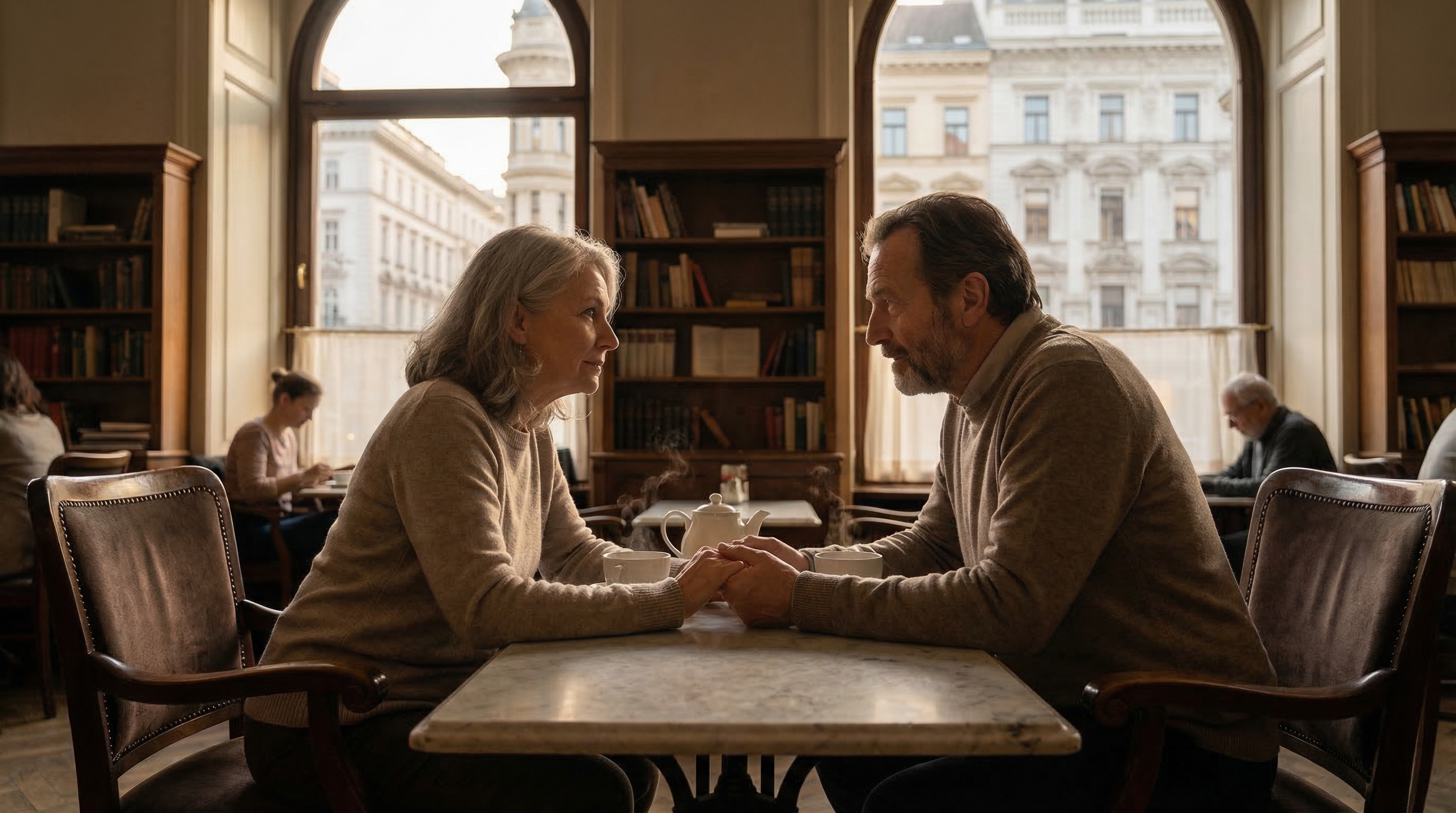
The Psychology of Partner Selection: Why Germans Are So Selective
Deep analysis of German selectivity in dating — balancing rationality, cultural values, and unconscious patterns in the search for love
The Science Behind German Dating Standards
When it comes to finding a partner, Germans have a reputation—and it's well-founded. Research on partner selection shows that German-speaking singles tend to be more selective when choosing a life partner compared to many other European cultures. But this selectivity isn't a flaw; it's the result of deep psychological and cultural conditioning that deserves understanding.
The psychology of partner selection is a fascinating field that examines both the unconscious and conscious criteria people use when choosing a mate. For Germans, several factors work together to create a distinctive pattern.
The Trust-First Principle
One of the core findings in relationship psychology is that Germans—particularly in professional and personal contexts—place strong value on reliable foundations. This carries over into romantic partner selection. An interesting psychological concept here is the so-called "trust-first" model: German singles initially evaluate potential partners based on reliability, consistency, and authenticity before emotional attachment can develop.
This explains why superficial pickup lines or spontaneous dates are often less effective. A Berlin software engineer or a Munich entrepreneur will take time to get to know someone whose values and life goals align with theirs—this isn't coldness, it's rationality in service of genuine feelings.
Cultural Roots: Privacy and Depth
German culture has a historically rooted preference for privacy and intimacy within a close circle. Unlike more extroverted cultures that externalize and share romantic feelings quickly, Germans tend to reveal their emotions only when they're certain.
This also connects to the German mindset, which draws clear boundaries between different life domains. Someone ambitious at work doesn't want the same competitive dynamic in a relationship—they seek complementarity. A Hamburg doctor won't necessarily only be compatible with other doctors, but they will want to understand why their partner takes their career seriously.
The partner selection criteria in the German mindset are therefore often layered:
- The rational level: Stability, reliability, shared values, financial independence
- The emotional level: Authenticity, intellectual depth, shared sense of humor, emotional availability
Both must be present—one without the other isn't enough.
The Role of Intellect in Partner Selection
Why "Intellectual Chemistry" Is Central for Germans
One of the most striking findings about German dating mentality is the importance of intellectual compatibility. This isn't coincidental. German cultural history has elevated Enlightenment philosophy, critical thinking, and intellectual discourse—and this continues into modern relationship expectations.
In serious partner search in Germany—such as on Deutsch Dating—many singles report they're more likely to connect with someone they can discuss ideas, politics, literature, and social issues with than someone who is purely physically attractive. This is psychologically significant because it suggests German partner selection is driven less by short-term desire (as in some other cultures) and more by long-term compatibility.
This focus on intellectual depth also explains why Germans tend to marry later—they choose more carefully and thereby minimize the risk of mismatched partnerships.
Psychological Safety as the Foundation
Psychology shows that people raised in cultures valuing stability over quick wins go through a different partner selection process. They unconsciously ask more questions:
- Can I trust this person long-term?
- Do we share fundamental values?
- Will this person be there during difficult times?
- Do we mutually respect each other's boundaries and privacy?
These questions might sound like a job interview—but psychologically, they're why Germans only enter romantic relationships once these criteria are met.
Regional Differences in the German-Speaking World
Interestingly, relationship psychology in the German-speaking region isn't monolithic. There are subtle but meaningful differences:
Germany
German singles—particularly in the south and traditionally Prussian regions—are known for their directness. A Hamburg native or Stuttgarter will approach partner selection methodically, weigh compatibility, and only then invest. This isn't unromantic; it's a different expression of romance: choosing someone suited for the long haul.
Austria
Austrian singles often bring more warmth and humor to relationships while maintaining German thoroughness. A Viennese person might visit a wine tavern and express feelings more readily than a Berliner—but the fundamental expectation of authenticity and seriousness remains.
Switzerland
Swiss singles are even more pragmatic about partner search. Here, German thoroughness combines with Swiss efficiency. A Zurich lawyer will know what they want and won't waste time with detours.
The Flip Side: When Selectivity Becomes an Obstacle
Perfectionism and the Illusion of Complete Compatibility
While German selectivity in partner choice has many advantages—lower divorce rates, deeper connections, fewer impulsive decisions—there are also challenges. One psychological trap is the pursuit of the "perfect" partner.
Many German singles—particularly highly educated professionals—unconsciously develop extensive lists of criteria. But psychologically, these lists often become unrealistic: a partner who combines everything—career success, emotional availability, physical attraction, intellectual fascination, identical hobbies, similar financial status—is a chimera.
The psychology of partner selection shows that real relationships develop through complementarity, not identity. A Vienna architect might find more fulfillment with an artist whose financial stability is less assured than with another architect—because emotional and intellectual depth has different textures.
The Paradox of Choice
Modern serious dating platforms have given Germans more options than ever before. Paradoxically, this can intensify selectivity: when a better option is always just a swipe away, the current candidate gets eliminated more quickly.
Psychologically, this is the "paradox of choice." Too many options lead to greater dissatisfaction, not better decisions. A Cologne entrepreneur with access to hundreds of potential partners on an app could ironically be lonelier than someone operating in a smaller social network.
Authenticity as the Highest Selection Criterion
Why Superficiality Repels Germans
One of the deepest psychological insights about German dating mentality is the central role of authenticity. "Be genuine" isn't superficial advice—it's a culturally embedded value system.
Germans, particularly educated and reflective singles, quickly detect when someone is putting on a facade. This makes it harder for people with superficial intentions—but it also means genuine, vulnerable authenticity resonates much more strongly with Germans.
A Dortmund engineer will value a woman who shares her doubts, dreams, and insecurities more than one who maintains a perfect image. This is psychologically significant: it creates space for real emotional intimacy, not performative connection.
The Deep Conversation Over Superficial Flirting
To truly understand Germans, you must recognize that their approach to early dates often resembles "constructive conversation" rather than flirtatious fun. A Munich native might ask important questions on a first date: "What values matter most to you in a relationship?" or "Where do you see yourself in five years?"
This isn't cold—it's thorough. It's the German way of building trust: through clarity, not mystery.
Practical Implications for Partner Search
For Those Dating Germans
When dating German singles, understand that selectivity isn't rejection—it's a screening process. Respecting this and investing similarly (authenticity, reliability, intellectual openness) is the path to genuine connections.
For German Singles Themselves
An important insight from relationship psychology is that perfectionism is the enemy of partnership. The best strategy in German partner search is to clearly define your non-negotiable values—and then remain open to surprises.
A Bremen doctor doesn't necessarily need to find another doctor. A Berlin publisher doesn't necessarily need to be with an academic. But both should choose people with whom they can experience depth, mutual respect, and authentic connection.
Conclusion: The Strength of Thoughtfulness
The psychology of partner selection among Germans isn't a symptom of coldness or emotional distance. It's the opposite: it's an expression of respect—for yourself, for the other person, for the significance of genuine partnership.
Selectivity, when guided by authenticity, leads to deeper partnerships, not less love. German singles understand that real love is built on foundations—trust, shared values, intellectual compatibility, and mutual respect.
In a world that often celebrates superficiality, this German approach isn't an obstacle; it's a gift. It's the psychology of permanence in a world of transience.
Read more
The German Dating Etiquette: A Fresh Look at Relationship Norms
Explore the art of German dating etiquette and how to act authentically in a respectful relationship.
German Dating Etiquette: A Fresh Perspective on Respectful Encounters
Discover how German dating etiquette fosters authentic relationships and what it means to seek serious partnerships.

Communication Skills: The Key to Serious Relationships
Discover how excellent communication skills can enhance your chances of serious relationships in Germany.